Will Future Energy Come from the Arctic?
The Norwegian government and the oil industry have big ambitions for oil and gas in the Barents Sea. But are these ambitions realistic? And for how long will Europe keep buying petroleum from the Arctic?
Om arrangementet
Welcome to Petropraten at KÅKÅnomics, held at the Påfyll venue, Kirkegata 36, Stavanger, or online! This edition of Petropraten will be in English.
Sign up to join online using the registration button above – or buy a ticket from KÅKÅnomics here, to attend in person.
The European Commission is scheduled to present a new Arctic strategy on 20 October. In its previous strategy, the EU set the goal of stopping new oil and gas fields in the Arctic, or of avoiding purchases of oil and gas from new fields north of the Arctic Circle. The signals so far suggest that this goal may be maintained. What would such a fossil fuel moratorium mean for Norwegian oil and gas in the north?
«The energy of the future will come from the Arctic,» Prime Minister Jonas Gahr Støre has said. Energy Minister Terje Aasland believes the «petroleum adventure in the north» has only just begun. At the same time, there are only three producing fields in the Barents Sea, exploration has yielded few results, and there are no concrete plans for new gas infrastructure. Perhaps the Barents Sea is no longer the great petroleum region the future was supposed to bring?
Meanwhile, Norway’s most important market is going through a rapid energy transition. The EU prefers “homegrown” clean energy. What happens then to Norway’s Arctic ambitions? And who is actually going to buy the oil and gas?
Programme
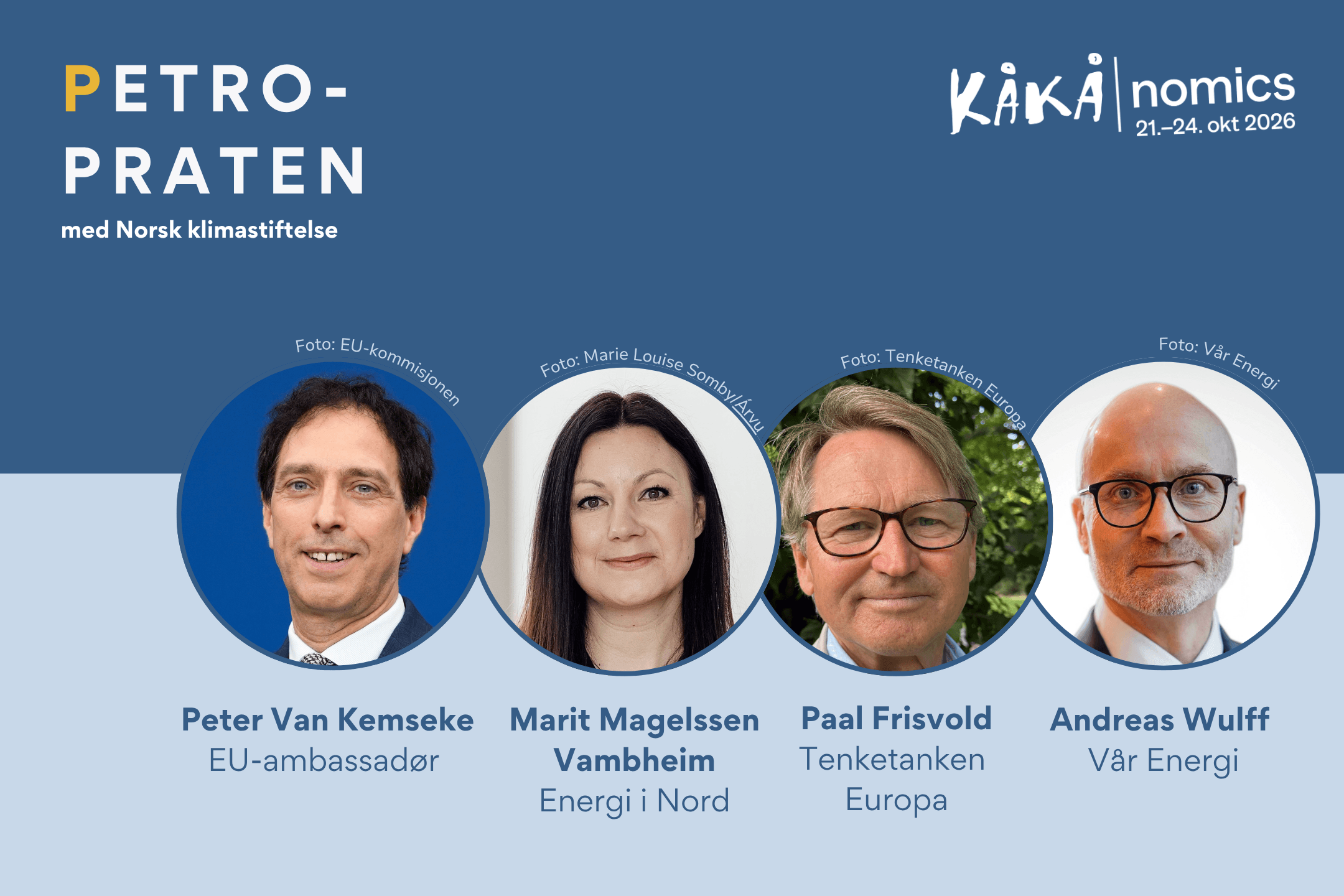
Key note: "The Future of EU–Norway Energy Cooperation"
By Peter Van Kemseke, EU Ambassador-designate to Norway
Panel discussion
- Marit Magelssen Vambheim, CEO, Energi i nord
- Paal Frisvold, rådgiver, Project Coordinator, NGO Alliance for the EU Fossil Fuel Moratorium
- Andreas Wulff, Director of Policy and Public Affairs, Vår Energi
Moderator: Anne Karin Sæther, Project Manager, Norwegian Climate Foundation